













‘I couldn’t care less about changing the conventions of mainstream television’
(David Lynch)
‘The series definitely doesn’t insult anyone’s intelligence’
(Mark Frost)
In 1990 a cultural revolution took place on TV screens, first in America, then over on these shores. Audience and critical approval of the ground-breaking new show known as Twin Peaks was little short of unprecedented. No other TV programme in history had acquired such a cult following so quickly. Everywhere you went people were talking about ‘The Dwarf’, ‘The Double R Diner’, ‘The Red Room’ and ‘One Eyed Jack’s’. Peak parties were all the rage and fanzines such as February 24 and Wrapped in Plastic cropped up not long after. And in every cafe from here to Alabama customers were asking for a “Damn fine cup of coffee and a slice of cherry pie”.
To understand exactly why this happened you have to first know a little about David Lynch, heralded by many as the guiding light of the show. Back in 1971, after completing two surreal shorts (The Alphabet and The Grandmother), Lynch began work on a full-length feature. Eraserhead, eventually delivered in 1977, wasn’t a huge success with the general public but it soon became popular with late night crowds and built up a considerable army of fans.
His next two projects, The Elephant Man (1980) starring John Hurt, and Dune (1984) based on Frank Herbert’s SF novel, were more ‘mainstream’ affairs by his standards. But in 1986 Lynch set the seal on his reputation as a surrealist auteur with the forerunner to Twin Peaks: Blue Velvet.
Here Lynch was able to dwell on a particular obsession of his, scratching the surface of American life - particularly in small towns - to reveal the seamier side of things; in this instance the violent and perverted activities of psychopathic drug lord Frank Booth (Dennis Hopper). Audiences were repelled and intrigued at the same time, making the film a box office smash and turning Lynch into virtually a house-hold name.
With his passion for all things creative (as well as directing, Lynch has turned his hand to writing, acting, painting and music over the years), it was inevitable that he would get involved in television at some point or another. And in the late 1980s he did just that.
Lynch decided to join forces with Mark Frost, a scriptwriter best known for his work on Hill Street Blues. This was mainly because they’d collaborated before, albeit on undeveloped efforts such as The Lamurians (a proposed cops and aliens show) and Goddess, based on the life of Marilyn Monroe. This time they envisaged a series much more suited to Lynch’s talents, concentrating on another small town “full of secrets” and the character of murdered Laura Palmer who reflected this facade.
And although Lynch would only direct six episodes himself - the pilot and certain key shows (other directors included Caleb Deschanel and actress Diane Keaton) and wrote only a handful of scripts (along with Robert Engels, Harley Peyton and Scott Frost), he was destined to become the official face of Twin Peaks. Perhaps this is because it fits so snugly into his canon of work and has his trademark visual style, even if he wasn’t always at the helm. For a start the cast featured many Lynch regulars, chief amongst these being the late Jack Nance (star of Eraserhead) and Kyle MacLachlan (Paul Atreides in Dune and Blue Velvet’s Jeffrey Beaumont).
In addition, like most of Lynch’s other pieces, Twin Peaks was post-modern. It openly alluded to well-known TV shows (e.g. Peyton Place in the soap opera elements, Man From Uncle in the use of FBI characters, and The Prisoner with its bizarre situations and humour); as well as paying homage to cinematic categories such as Film Noir, Gothic Horror, Romance, Science Fiction and Screwball Comedy. However, this was only part of its appeal.
Obviously, Twin Peaks was influenced by a wide range of TV genres. I’ve already mentioned soap opera, but add to this murder mystery, sit-com, high-school romance and melodrama. Yet it took the conventions of these and twisted them, pushing the boundaries of what had gone before and destroying rules that were previously set in stone.
Nowhere can this be seen more clearly than in the detective aspects of the series (the real heart of Twin Peaks) underlined by its central hero - a certain enigmatic FBI agent. Even from the start TP was marketed as a ‘whodunit?’. The adverts asked “Who killed Laura Palmer?”, then invited viewers to watch and decide for themselves. They didn’t stand a chance!

You see, the slaughter of high-school belle Palmer was one of the strangest and most complex cases ever conceived, and would take more than the logical deduction of Sherlock Holmes or the strong-arm antics of Mike Hammer to crack. Though it appeared to be a straightforward rape and homicide, other forces beyond our imagination were at work. Beings from another reality were about to make their presence felt (more on this later).
Only one detective, Dale Cooper - Coop to his friends - (MacLachlan), had the intuition and wherewithal to deal with this. Granted, at times it looked like his mind wasn’t really on the job but, like most other things in Twin Peaks, this was only an illusion.
For example, when we first meet Cooper he is driving to Twin Peaks and talking into his dictaphone to Diane (an assistant who may or may not exist, or possibly the dictaphone itself?). He seems preoccupied with the trees around him - “I’ve got to find out what they’re called!” - instead of focusing on the case ahead. He even stops Sheriff Harry S. Truman (Michael Ontkean) on the way to view Laura’s body and asks him what type of fantastic trees they are. A bemused Truman replies, “Douglas Firs.” Now at first glance this might seem like he’s holding up the investigation with inconsequential nonsense. But, as we later find out, the trees - especially those in the forest - are very significant.
Similarly Coop keeps making pit stops at the local diner to sample their food. A glutton? On the contrary. It’s here that he observes TP’s residents going about their business and gains insights into their relationships. Yep, Cooper was a policeman who could tell if you were guilty just by looking at you, as he aptly demonstrates when interviewing suspects. Not that this talent alone would help him catch Laura’s killer.
What would help, though, was Cooper’s refusal to accept things at face value and his ability to embrace the unknown. His utilisation of Tibetan truth-finding methods (by hurling rocks) and understanding of the power of dreams (a gateway to another world) are cases in point.
Another reason for Peak’s success was the weird bunch of supporting characters (again a Lynch staple). There’s the Log Lady played by Catherine Coulson, who carries a lump of wood around with her proclaiming it will speak up one day about the mysteries of the town; Deputy Andy Brennan (brilliantly portrayed by Harry Goaz), a sensitive but incompetent officer who can’t help crying when he sees a dead body; the dotty Sheriff’s receptionist with a doughnut obsession, Lucy Moran (Kimmy Robertson); Laura Palmer’s psychic mother, Sarah (Grace Zabriskie), and singing father, Leland (Ray Wise); Major Garland Briggs (Don Davis) who is connected with Project Bluebook; brothers Ben and Jerry Horne (Richard Beymer and David Patrick Kelly), two ruthless business moguls; Gordon Cole, Coop’s deaf boss (Lynch in a cameo); Nadine Hurley (Wendy Robie) with her eye-patch and mission to invent silent drape-runners; a whacko psychiatrist, Dr Jacoby (Russ Tamblyn); a transsexual FBI operative, Denis(e) Bryson (David - Mulder - Duchovny in a pre X-Files role)...to name but a few.
Plus there’s the usual smattering of Lynch humour (black or otherwise). Examples of this include: sarcastic FBI pathologist Albert Rosenfeld (Miguel Ferrer) getting a smack in the mouth from Truman, then kissing him to show there’s no hard feelings; an ancient Bellhop (Hank Worden) at the Great Northern Hotel who keeps coming back because he can’t remember what you’ve just said; Andy and Lucy’s rocky love affair and her subsequent pregnancy; and wifebeater Leo Johnson (Eric Da Re) ending up as a wheelchair-bound vegetable.
And, it has to be said that a large proportion of the audience tuned in to ogle at the various good-looking actors (whether they be male or female). For the lads there was: Sherilyn Fenn (nicknamed Miss Twin Peaks by the press) as Audrey Horne - whose cherry trick has to be seen to be believed; Madchen Amick as waitress Shelley Johnson; Lara Flynn-Boyle as Laura’s best friend, Donna Hayward; Sheryl Lee as both Laura and her cousin Maddy; Joan Chen playing businesswoman Josie Packard; and Peggy Lipton as Norma Jennings, owner of the Double R Diner.
The ladies could choose from: big Mac, already mentioned; Michael Ontkean; Dana Ashbrook as Bobby Briggs, Laura’s official boyfriend; Michael Horse (Deputy Hawk); Everett McGill as Ed Hurley; and teen Heartthrob James Marshall playing biker James Hurley.
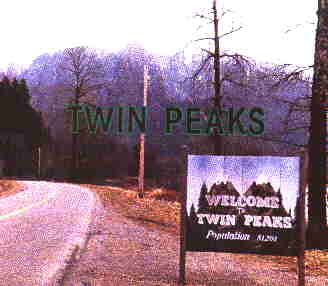
The first instalment of Twin Peaks premiered on the ABC network on April 8, 1990. Viewers were greeted by Angelo Badalamenti’s haunting theme music (his score would prove just as important as the visuals) spliced with images of a bird on a twig (just like the one at the end of Blue Velvet), a timber works, the ‘Welcome to Twin Peaks’ sign in front of two mountains, and a gushing waterfall.
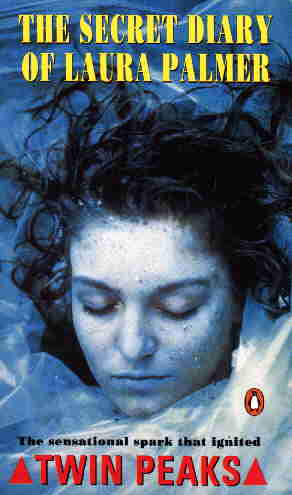
Thus the pilot kicked off with Pete Martell (Jack Nance) stumbling upon Laura’s body on the beach. “She’s dead!” he tells Harry over the phone, “Wrapped in plastic”. The blue-tinged face of Laura’s corpse, framed by clear polythene would be the first of many disturbing things we’d witness over the course of the next 30 shows.
In the space of 90 minutes, the tone of Twin Peaks was set by Lynch - a template for others to follow. Most of the important figures were introduced, though certainly not in a rushed way. We learnt that Laura wasn’t the innocent everyone assumed when Cooper discovered cocaine in her diary and a key to a safety deposit box containing a home video, a copy of Fleshworld magazine and $10,000.
And other vital clues were offered including a tiny letter R under Laura’s ring finger, a survivor of the attack, Ronette Pulaski (Phoebe Augustine), turning up on the railway lines, a note saying ‘Fire Walk with Me’ and half of a heart pendent being discovered at the site of Laura’s death, and James Hurley burying the other half of the necklace. The show concluded with James being arrested, then a mystery person digging the pendent back up.
[Readers might be interested to know that a second version exists on video in this country which contains an extra 20 minutes of footage. Not only do we get Andy playing the trumpet here, but also a different ending to the Laura Palmer story - as if it were a feature film. In my opinion, though, it’s nowhere near as satisfying as the scenario played out in the series.]
Most of these clues would be followed up in the first season, and would lead to even more questions. The remainder of the time would be taken up developing various affairs: the Bobby, Shelley and Leo triangle; the Norma, Ed and Nadine situation; Harry and Josie’s fling; and Audrey chasing after Agent Cooper.
But in episode three (the second one directed by Lynch), there was a real taster of the wonders to come. Cooper dreams of a sinister-looking fellow, BOB (Frank Silva) who threatens to kill again, and a one-armed man, “In the darkness of future past, the Magician longs to see, one chance out between two worlds. Fire, walk with me. We lived among the people...I too have been touched by the devilish one. A tattoo on the left shoulder. Ah, but when I saw the face of God...I took the entire arm off.”
Next he’s in a room with red curtains trailing over a black and white floor. Laura Palmer is on the couch and Cooper is suddenly a lot older. A dwarf, the Man from Another Place (Michael J. Anderson), starts talking in a strange backwards way, “That gum you like is going to come back in style.” He says the Palmer look-a-like is his cousin and she proceeds to whisper something in the agent’s ear. When he awakes, Cooper realises that BOB is Laura’s killer.
Though it’s mind-boggling to watch initially, this is a major sequence for two reasons. Firstly, it introduces the spirits (BOB, MIKE the one-armed man, and the Dwarf) who we later find out inhabit the Black (Hell?) and White (Heaven?) Lodges - the Red Room being neutral territory. Secondly Coop now has hidden in his subconscious mind the name of the person BOB ‘used’ to kill Laura.
By the end of season one (episode 8 - May 23 1990), US audiences were well and truly hooked, especially as Cooper was shot in the cliff-hanger finale. They only had four months to wait for the next series, however, and the gap was made more bearable by the publication of Laura’s diary - written by Lynch’s daughter, Jennifer. More tantalising clues surfaced and fans who were on the ball should’ve been able to work out who the killer was from this (someone who ‘visited’ Laura all her life, and had access to her bedroom at night...).
Twin Peaks returned on September 30th in America (just before the pilot premiered on BBC 2 over here) with yet another Lynch episode. In his delirious wounded state Cooper sees the Giant (Carel Struychen from the Addams Family) who will guide him on his quest.
The search for the killer was drawing slowly to a close now, with the introduction of more signposts such as Maddy’s terrifying visions, Laura’s secret diary emerging, and the one-armed man finally being questioned (“BOB was my familiar...BOB requires a human host...He lives on fear, and the pleasures.”)
Of course, this was broken up by other sub-plots like Audrey’s infiltration of One Eyed Jack’s, and more wheeling and dealing with Josie’s timber business. But at long last all was revealed in the chilling 15th episode. Maddy is about to leave Twin Peaks and is prevented at the last minute by her now white-haired Uncle Leland. We finally see him as BOB when he glances in a mirror, then he brutally murders Maddy, screaming, "You’re Going back to Missoula, Montana!" (Lynch’s home town).
A heart-stopping couple of shows followed where Leland tried to dispose of the body and more red herrings fooled the police. Until the Old Bellhop at the Great Northern brings Cooper a stick of his favourite gum (“I haven’t seen it since I was a child”). This triggers his memory about the dream from episode three and he finally recalls what the Laura doppelganger whispered to him: “My father killed me.”
Leland is arrested but Truman still has a hard time believing in BOB. “Is it easier to believe that a father raped and murdered his daughter,” asks Cooper sombrely. Unfortunately BOB escapes, leaving Leland to die remembering what he has done while the evil spirit possessed him.
With the mystery solved, Twin Peaks was at a bit of a loose end. The soap aspects took centre stage and even the introduction of a new villain from Cooper’s past, Windom Earle (Kenneth Welsh), wasn’t enough to revitalise the formula.
On February 15 1991, ABC announced TP was going on an ‘indefinite hiatus’ - a move which usually signalled cancellation. Ironically they suspended the show just as it was getting interesting again; the scene where Josie’s soul is trapped inside the knob of a bedside table is one of the most original and unsettling I’ve ever seen.
Thankfully, there was still a lot of support out there. Well, Twin Peaks had been nominated for 14 Emmys and named best programme by the Television Critics Association. Lynch and MacLachlan appeared on TV to call for a letter-writing campaign (similar to the one that saved Star Trek in the 60s) and C.O.O.P (Coalition Opposed to Offing Peaks) was set up. Pretty soon TP was back on air, if only for another six weeks.
But we should be grateful because the climax to the whole thing was some of the most powerful TV ever produced. Lynch took the reins again for the last feature-length episode, which saw Earle kidnapping Cooper’s new love, Annie Blackburne (Heather ‘Boogie Nights’ Graham), and venturing into that other dimension in the forest. Coop follows, chasing them through the White and Black Lodges. BOB eventually takes Earle’s soul, and Cooper rescues Annie - or so we’re led to believe. In one of the bravest (and cruelest) twists of Twin Peaks, Lynch lets us believe the ordeal is over...then goes in for the kill. The final unpleasant scene has ‘Cooper’ smashing his head against a mirror and looking up to see the face of BOB staring back. We should have expected no less, I suppose.
For Peakies suffering withdrawal symptoms Pocket Books brought out their follow-up to Laura’s diary, entitled Dale Cooper: My Life, My Tapes. This covered Coop’s life since his youth and provided a unique opportunity to examine the Windom Earle back-story.
Meanwhile Francis Bouygues, owner of the French TF1 Channel, launched his Ciby 2000 film production company and signed David Lynch up to make four movies, the first of which would be a Twin Peaks project. Followers were delighted, assuming the tale would pick up where the series left off. In actual fact the script, co-written by Robert Engels, concentrated on the last seven days of Laura Palmer’s life. A prequel in other words. Sadly, Lynch totally misjudged what the audience wanted. And when Twin Peaks: Fire Walk with Me opened in 1992, it was panned by the critics and shunned by film-goers.
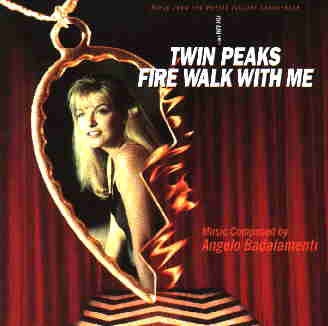
This was not just because of the focus of the movie, either. Gone was the endearing familiarity, soap atmosphere and mysterious storyline that made the TV show such a hit. In its place was uncompromising violence, sex and drug-addiction. Most of the regular cast were absent (even Donna was now played by Moira Kelly). And to top it all off, we already knew what was going to happen at the end; we’d just spent two years finding that out!
Nevertheless, FWWM is engaging in parts. The prologue with Chet Desmond (Chris Isaac) and Sam Stanley (Keifer Sutherland) investigating the death of BOB’s first ever victim allows for at least some humorous interludes. Then there’s the scene where ghostly Philip Jeffries (David Bowie) appears to Coop at FBI headquarters. And the juxtaposition of Laura’s clean cut image with the depraved world she gets sucked into may be hard to watch, but it’s a necessary part of the TP mythology.
Since this movie bombed we’ve heard nothing more about Twin Peaks follow-ups so it seems unlikely that the annoying cliff-hanger will ever be resolved (however, in a way it already has been in Cooper’s dream. He sees an older version of himself there, suggesting that the ‘Good’ Coop will be trapped forever in the Red Room). And for some unfathomable reason the BBC has never repeated the show since its initial outing over a decade ago, although it has enjoyed several screenings on satellite/digital channels.
Lynch might not have cared about changing the conventions of TV, but whether he intended to or not, that’s exactly what he did; injecting fresh ideas at a time when audiences needed them most. Cosequently, a spate of outlandish Peak-like shows appeared in America, such as Wild Palms, Northern Exposure, Eerie Indiana and Picket Fences...all of which were welcome, though none could ever top the original.
But if TP did have a flaw it’s the fact that, as Mark Frost said, it didn’t insult the viewer. Indeed, sometimes it tried so hard to do the opposite, it went over people’s heads. Things like the fish in Pete’s percolator, Dr Jacoby’s collection of cocktail umbrellas, the white horse in Sarah Palmer’s visions...Just what exactly did they mean? Then again, perhaps this ambiguity only added to the show’s charm.
In any event, there can be no denying the impact Twin Peaks had at home and abroad, and I for one feel it thoroughly deserves its classic status as part of television’s rich and varied history.
(C) P. Kane 1997